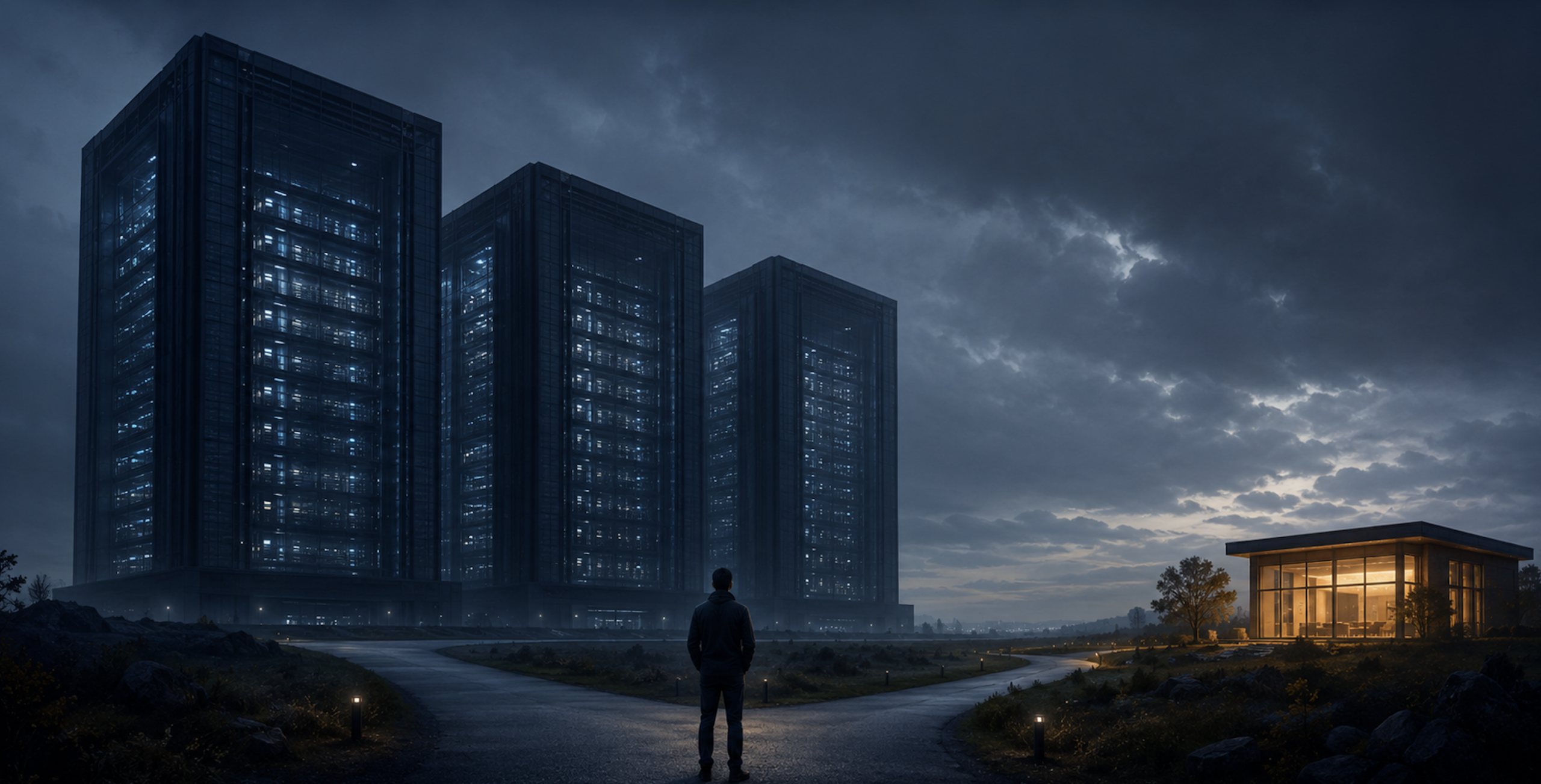
When missiles take down the cloud — and why Elon Musk wants to move it to space
Datacenter geopolitical risk is no longer a theoretical problem for MSPs. Two events this week made that impossible to ignore.
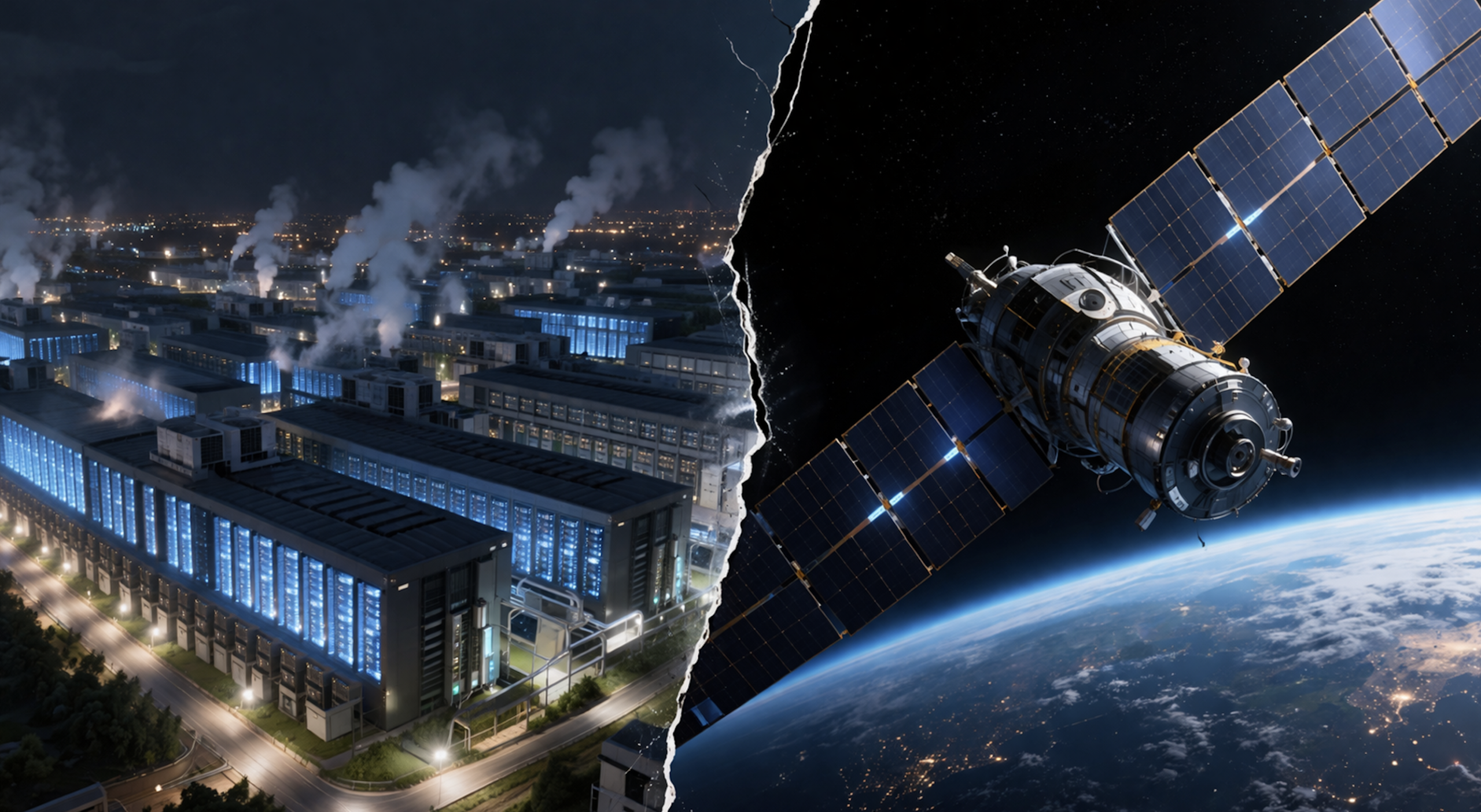
Iranian missile strikes took AWS data centers in Bahrain and Dubai fully offline. Amazon declared “hard down” status across multiple availability zones — with no stated timeline for recovery. Days later, Elon Musk filed plans with the FCC for a million-satellite orbital data center network, formally merged SpaceX with his AI company xAI, and told the world that space will be the cheapest place to run AI within two to three years.
These two stories look unrelated. They are not. Both are symptoms of the same underlying pressure: the ground is running out of room — and running out of safety.
What happened to AWS in the Middle East
On April 4, 2026, Iranian strikes hit AWS data centers in Bahrain and Dubai with enough force that Amazon was forced to declare multiple availability zones “hard down” — meaning completely unavailable. According to internal communications reported by Big Technology, AWS told affected services they “should not expect to be operating with normal levels of redundancy and resiliency.” There was no timeline given for when the affected regions — DXB and BAH — would return to normal.
Each of the impacted sites operates three compute zones. Both reported a mix of fully offline and impaired zones. AWS began migrating affected customer workloads to other regions, but for businesses running in those zones, the damage was already done.
This was not a hardware failure. No software bug caused a cascade. A geopolitical conflict reached into server rooms and switched them off.
Amazon was not alone. Iran had already threatened Nvidia, Microsoft, Apple, Google, and more than a dozen other US tech companies in the same period — and struck an Oracle data center in Dubai within days of the AWS incident. The conflict also disrupted the flow of aluminum, helium, and LNG through the Strait of Hormuz — all critical to the semiconductor supply chain — with damage that could take months or years to reverse.
Multi-zone architecture did not help. Redundancy did not help. The problem was not inside the infrastructure. It was outside it entirely.
Why Elon Musk wants to leave Earth
While the Middle East was going dark, Musk was making the case for the most extreme infrastructure pivot in history: moving compute off the planet altogether.
At the World Economic Forum in Davos earlier this year, Musk called it a “no-brainer” to build data centers in space. His argument is straightforward: Earth is running out of power, land, and stability. Space has none of those constraints. A solar panel in the right orbit produces significantly more energy than one on the ground — and does so continuously, without grid dependency, without permitting battles, and without geopolitical exposure.
SpaceX has now filed plans with the FCC for a constellation of up to one million data center satellites. The SpaceX-xAI merger is the corporate structure to pursue it. Musk’s “AI Sat Mini” spacecraft — shown at scale towering over Starship — would deliver 100 kilowatts of power per satellite for onboard AI processors.
The engineering challenges are significant. Cooling in a vacuum remains unsolved at the required scale. Components in orbit typically last around five years before radiation damage takes its toll. Experts at the European Space Policy Institute put a genuinely competitive orbital data center at least 20 years away. Deutsche Bank estimates parity with terrestrial infrastructure won’t come until well into the 2030s.
But the point is not whether Musk’s timeline is realistic. The point is that the most well-resourced technologist on Earth is seriously planning to move critical infrastructure into orbit — because the pressure on terrestrial infrastructure has become that severe.
The pressure that connects both stories
These are not isolated events. They are data points in a single trend.
Global datacenter electricity consumption is projected to exceed 1,000 TWh annually by 2026 — roughly equivalent to Japan’s total electricity use. AI clusters now require tens of megawatts of continuous power each. Half of planned US datacenter builds have been delayed or canceled due to power infrastructure shortages and supply chain constraints. Grid operators in Ireland and the Netherlands have already restricted new datacenter connections entirely.
The old model assumed that demand could always be met by building more infrastructure. That model is breaking. Power availability is limited. Permitting takes years. And as the Middle East has now demonstrated, even finished infrastructure in live production can be taken offline by forces that have nothing to do with technology.
Datacenter geopolitical risk, energy constraints, and pricing volatility are no longer edge cases. They are the operating environment.
What this means for MSPs — right now
Orbital data centers are not a solution for this decade. But the pressures driving that conversation are real, and they are landing on MSPs today.
If your clients’ workloads live entirely within a single hyperscaler region, you have already accepted a risk you may not have fully priced in. A power constraint, a regulatory change, a grid failure, or a geopolitical event outside your control can trigger an outage that you cannot fix, on a timeline you cannot predict, with no ability to escalate.
You are not running infrastructure. You are renting exposure.
MSPs operating in this environment need four things:
Predictable pricing
Not subject to hyperscaler capacity decisions, energy market volatility, or egress fee structures designed to make leaving painful.
Multi-region flexibility
Genuine workload portability across providers and geographies — not just availability zones within the same vendor’s footprint.
Vendor independence
The ability to move, scale, and build without lock-in to a platform whose priorities are not aligned with yours.
Control
Over where workloads run, how they perform, and what they cost.
Where AVETTA fits
AVETTA is built for exactly this operating environment.
We give MSPs fixed, transparent pricing with no hidden bandwidth, I/O, or egress costs. We operate across data centers spanning North America and Europe — Salt Lake City, Las Vegas, Chicago, Dallas, Atlanta, London, Amsterdam, and more — with no single point of geopolitical or grid failure. Our KVM-based infrastructure carries no vendor lock-in. Our month-to-month billing model means you are never trapped.
While hyperscalers navigate the consequences of concentrating critical infrastructure in geopolitically exposed regions — and while Musk engineers satellites the size of a Starship to escape the problem — AVETTA gives MSPs a practical path to infrastructure they actually control. Today. On Earth.
You do not need to go to space. You need infrastructure that works, on your terms, with predictable costs and genuine redundancy.
The question is not whether infrastructure will change. It already has. The question is whether you are building on infrastructure you control — or depending on someone else’s.
Book a free demo with AVETTA to see how we support MSP infrastructure independence.
Sources
- Tom’s Hardware — Iranian missile blitz takes down AWS data centers in Bahrain and Dubai
- TechCrunch — Elon Musk is getting serious about orbital data centers
- NPR — Will data centers in space work? Elon Musk says yes
- SpaceNews — SpaceX offers details on orbital data center satellites
- Fortune — Elon Musk’s bold new plan to put AI in orbit
- Euronews — Elon Musk’s space data centre plans could see SpaceX monopoly on AI and computing
- Rest of World — Who will regulate Elon Musk and China’s data centers in space?
- International Energy Agency — Electricity 2024 Report (datacenter energy projections)