CoreWeave and the AI infrastructure race — what MSPs need to know
A company that started life in 2017 as a cryptocurrency mining operation just signed a $21 billion deal with Meta Platforms and a separate multi-year agreement with Anthropic to power its Claude AI models. That company is CoreWeave. Its stock has risen 176% since its IPO. This is not a company to sell you anything — it is a company worth understanding, because what it represents tells you something important about where cloud infrastructure is heading.
What CoreWeave actually is
CoreWeave (Nasdaq: CRWV) is a specialist cloud provider built entirely around GPU compute for AI. Founded in New Jersey as Atlantic Crypto, it began by mining Ethereum using graphics processing units. When the crypto market crashed in 2018, the founders repurposed their GPU inventory for AI workloads — and found themselves holding exactly the hardware the world was about to need most.
Where Amazon Web Services, Microsoft Azure, and Google Cloud offer general-purpose cloud infrastructure, CoreWeave does one thing: it provides access to high-performance NVIDIA GPUs to companies building and running AI models. Its bare-metal architecture is purpose-built for AI workloads, delivering performance that general-purpose clouds — encumbered by legacy infrastructure and virtualisation overhead — struggle to match.
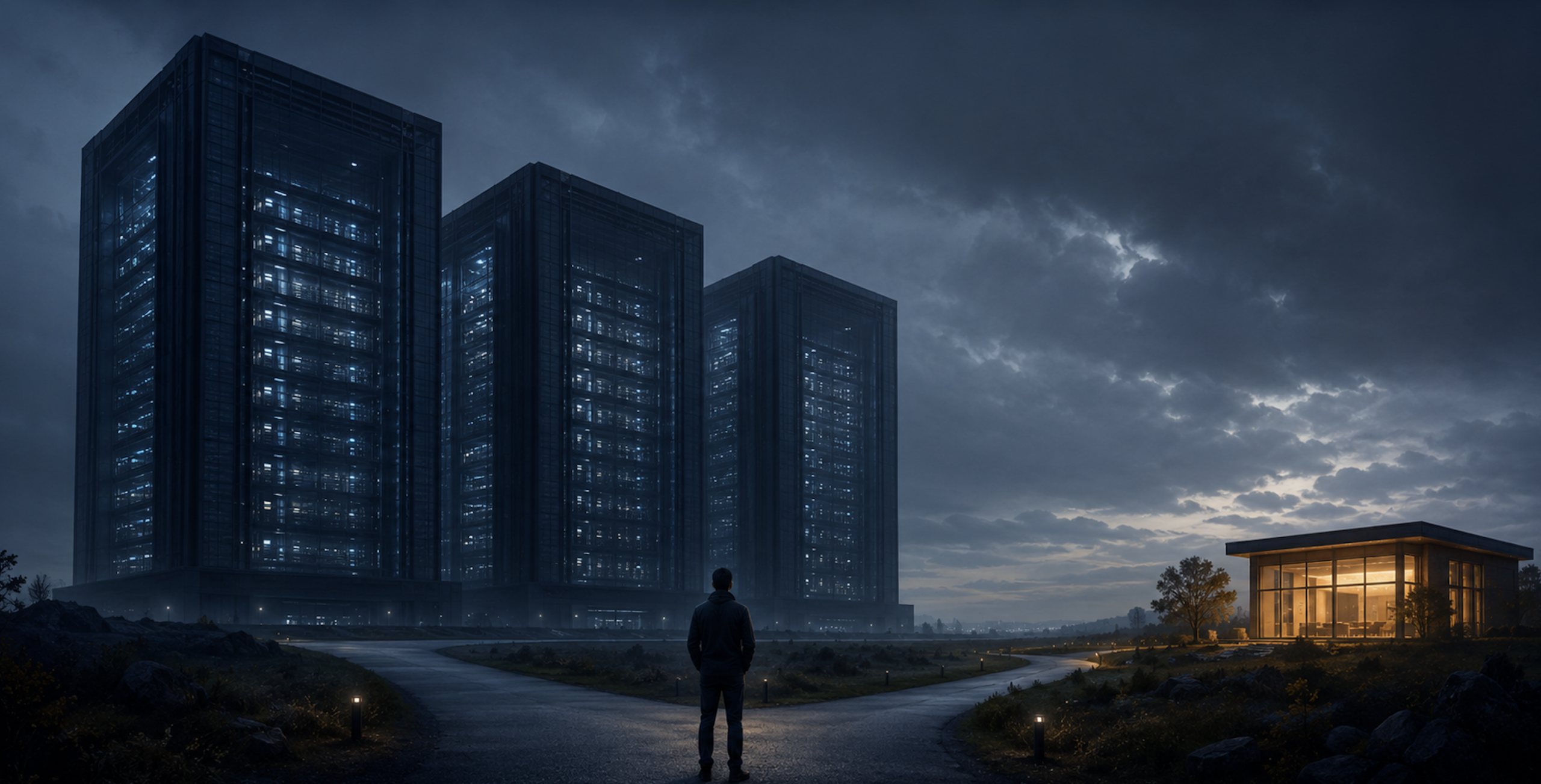
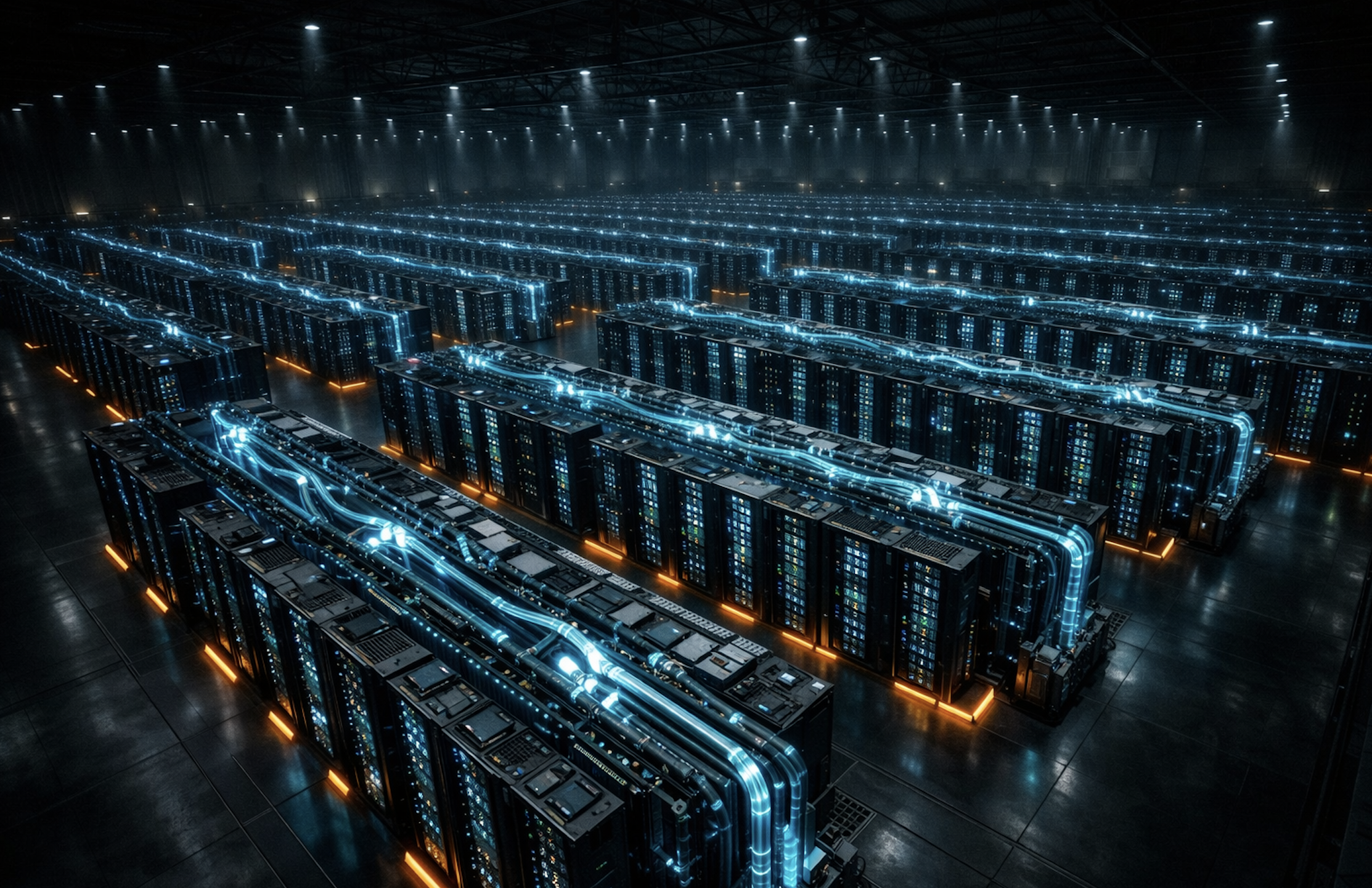
As of 2025, CoreWeave operates 33 purpose-built AI data centers across North America and Europe. Its European footprint includes two UK sites — Crawley and London Docklands, operational since January 2025 — with its European headquarters in London. It has committed a further $2.2 billion to continental Europe, with new data centers in Norway, Sweden, and Spain planned.
The stock story — and what the numbers actually mean
CoreWeave priced its IPO at $40 per share on March 28, 2025 — raising $1.5 billion in the largest US technology IPO in four years. The offering had to be downsized from a planned $2.7 billion, and NVIDIA stepped in with a $250 million anchor order to get it across the line.
The stock climbed sharply in the months that followed, hitting an all-time high of $183.58 in June 2025 — up over 350% from IPO price in under three months. It then pulled back substantially as investors weighed CoreWeave’s heavy debt load against its growth story, falling to a 52-week low of $33.52 — below the IPO price.
Then in April 2026, the Meta deal and the Anthropic agreement landed within days of each other. The stock gained 45% in a single month, trading around $117 as of April 14, 2026, with a market capitalisation of approximately $58 billion. Macquarie upgraded it to Outperform with a $125 target. D.A. Davidson set a target of $175.
The volatility matters as much as the headline numbers. CoreWeave posted revenue of $5.13 billion in 2025 — up 168% year on year — but lost $1.2 billion doing it. It plans to spend $30–35 billion on infrastructure in 2026 alone. The market is betting heavily on continued AI demand. If that demand holds, the leverage looks justified. If it doesn’t, the debt becomes a serious problem.
What this signals for MSPs
The relevant question for MSPs is not whether to invest in CoreWeave stock. It is what the forces driving its growth tell you about the infrastructure landscape your clients are operating in.
GPU capacity is genuinely constrained — and that affects everyone
The fact that Meta, OpenAI, and Anthropic — companies with direct access to Azure, AWS, and Google Cloud — are committing billions to a specialist provider tells you that the hyperscalers cannot keep up with AI compute demand. That supply pressure does not stay contained at the top of the market. It affects cloud pricing, availability, and resilience at every level of the stack.
Specialisation is outperforming generalism
CoreWeave’s model is built on doing one thing exceptionally well. Its purpose-built architecture outperforms general-purpose clouds for AI workloads precisely because it was designed for that use case and nothing else. The same principle applies at the MSP level. Providers who develop genuine depth in specific areas consistently outperform generalists when clients have serious requirements.
AI infrastructure is permanent, not cyclical
CoreWeave is not filling a temporary gap. The AI workloads being run today require specialised infrastructure that did not exist five years ago and is being built at scale right now. As more business software integrates AI capabilities, demand for that underlying infrastructure will grow. MSPs who position themselves ahead of that curve will be in a stronger position than those who wait.
The bigger picture — where this is heading
CoreWeave’s story does not exist in isolation. It connects to something larger — and more concerning — that is already playing out in the energy and infrastructure systems that cloud computing depends on.
We covered this partly in our earlier piece on datacenter geopolitical risk and the future of cloud infrastructure. The CoreWeave story is the demand side of that equation. Here is the supply side.
According to the International Energy Agency, global electricity consumption from data centers is projected to nearly double to 945 TWh by 2030 — roughly equivalent to Japan’s entire annual electricity use. In the US alone, data centers already consume 176 TWh per year — 4.4% of national electricity demand — and 550 new projects totalling 125 GW of capacity are in the global pipeline.
The grid cannot keep up. 50% of planned global data center projects are currently delayed due to power limitations and grid equipment shortages. AEP Ohio has paused all new data center interconnections. Ireland has implemented a de facto cap on new connections in the Dublin region. A Harvard Belfer Center report from February 2026 describes the situation as a “watershed moment” for the US electric grid.
A single AI task can consume up to 1,000 times more electricity than a traditional web search. The infrastructure being built at enormous speed by companies like CoreWeave is simultaneously the solution to AI demand and a new source of systemic infrastructure risk.
This is not a distant future scenario. In July 2024, a voltage fluctuation in northern Virginia caused 60 data centers to disconnect simultaneously — a 1,500 MW power surplus that required emergency grid adjustments to prevent cascading outages. The US grid, 70% of which was built between the 1950s and 1970s, was not designed for this.
The implications for MSPs are direct. Your clients depend on cloud services that depend on data centers that depend on a power grid under genuine strain. Infrastructure resilience — redundancy, vendor diversification, backup and recovery — is not a nice-to-have. It is increasingly the core of what good MSP service looks like.
Where AVETTA Cloud fits in
AVETTA Cloud is not CoreWeave. We are not in the business of renting NVIDIA GPUs to AI labs. What we provide is something different and complementary: reliable, independent cloud infrastructure for MSPs — built across 29 owned and operated locations spanning North America, Mexico, Canada, and Europe, including London and Amsterdam, with access to 71 facilities worldwide through partnerships.
That independence matters more as hyperscaler infrastructure comes under increasing pressure. When AWS regions go offline, when GPU capacity tightens, when grid constraints delay new data center buildouts, our infrastructure keeps running on its own terms — with the predictable pricing and direct support that large providers structurally cannot offer.
CoreWeave’s story is worth following — not as a competitor, but as a signal. And if it raises questions about how your MSP is positioned for what is coming, we are glad to talk through them.
Talk to us about your cloud infrastructure strategy.
Sources
- CoreWeave — IPO pricing announcement, March 2025
- Wikipedia — CoreWeave company history
- TechCrunch — CoreWeave UK data centers live, January 2025
- Datacenter Forum — CoreWeave $2.2B European expansion
- MacroTrends — CoreWeave stock price history
- Stock Analysis — CoreWeave financials
- Motley Fool — CoreWeave April 2026 analyst upgrades
- International Energy Agency — Energy demand from AI
- Tech Insider — The AI data center power crisis, 2026
- Harvard Belfer Center — AI, data centers and the US electric grid, February 2026
- Data Center Knowledge — 2026 predictions: AI sparks data center power revolution